
A customer case: low-spec headlights installed on a mid-spec vehicle
A BMW G05 originally fitted with mid-spec headlights with auxiliary cornering lights needed replacement headlight assemblies. A pair of low-spec headlights without auxiliary cornering-light hardware was supplied and installed for the end customer.
After installation, the customer reported that the low beam was not operating normally, while the high beam could turn on.
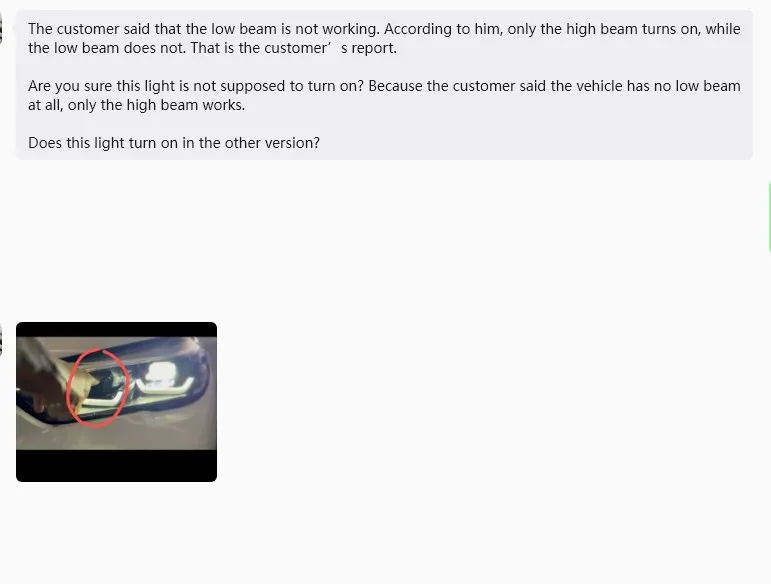
Figure 1. Customer feedback from this case. After the low-spec version without the auxiliary light was installed, the customer reported that the low beam did not work while the high beam could turn on.
This is the risk of selecting headlights only by outer appearance, vehicle model name, or connector similarity. The lamp housing may look almost identical, but the internal lighting hardware and the vehicle’s original electrical configuration may not match.
This feedback alone does not prove one single fault cause. Fault codes, headlight labels, wiring, and VIN-based vehicle configuration should still be checked. However, the confirmed equipment difference explains why a vehicle originally fitted with auxiliary cornering lights should not be directly fitted with a low-spec assembly that lacks the corresponding hardware and circuit.
Scope of this guide: This article is based only on the BMW G05 pre-facelift case and the photos supplied for this example. Always confirm fitment using the VIN, original vehicle equipment, and the headlight label before ordering or installing.
How to identify the difference
The main identification point is the inner area of the headlight, closest to the kidney grille. Do not rely only on the daytime-running-light shape or the outer housing.
Mid-spec headlight: functional auxiliary cornering-light hardware
The original mid-spec vehicle in this case has an LED auxiliary cornering-light source in the inner section of the headlight. It is not designed to remain on like a daytime running light. Under applicable control conditions, such as turning or low-speed cornering, it can provide additional side illumination.
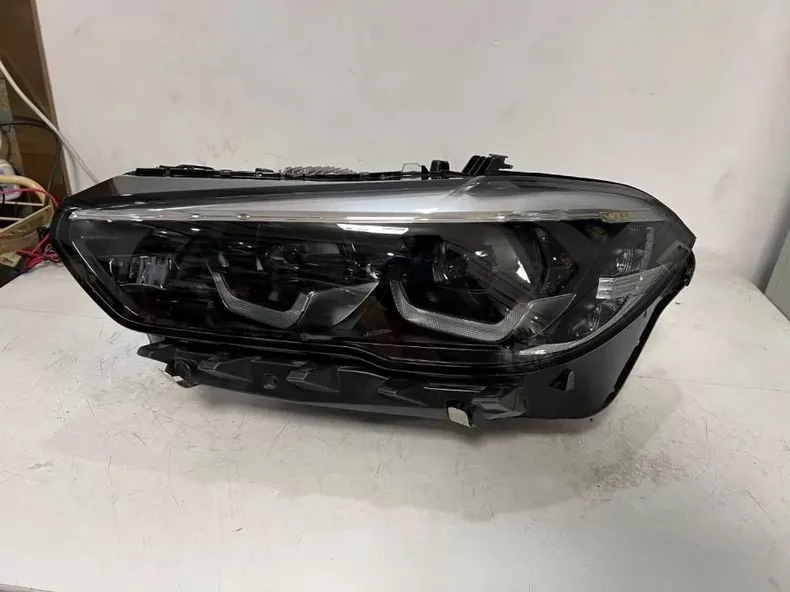
Figure 2. Mid-spec headlight used in this case. Its overall appearance is close to the low-spec version, so the inner section must be checked carefully.
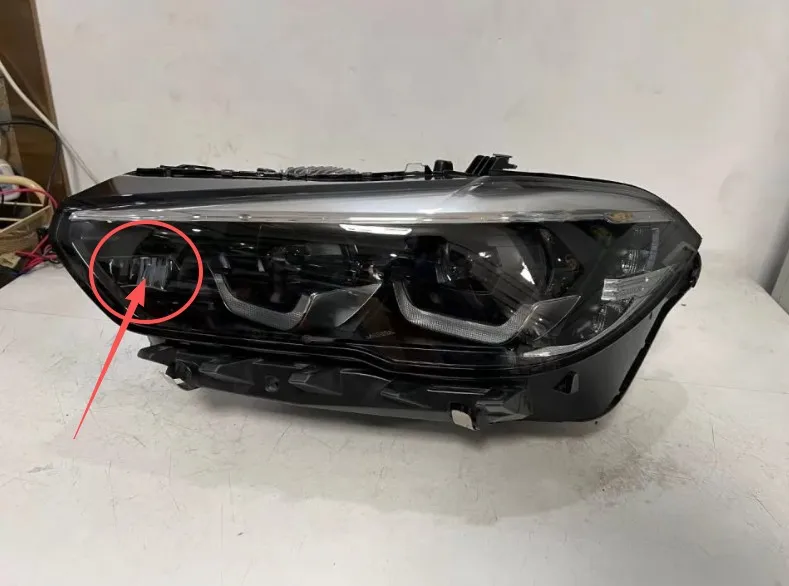
Figure 3. The marked inner area is the key identification point. On the mid-spec version in this case, it contains functional auxiliary cornering-light hardware.
Low-spec headlight: non-functional inner trim area
On the low-spec version, the inner chamber may look like part of the optical system when viewed from the front. However, in this case it has no LED light source, no active lighting module, and no auxiliary cornering-light function. It is a decorative lens or trim structure rather than a functional lamp.
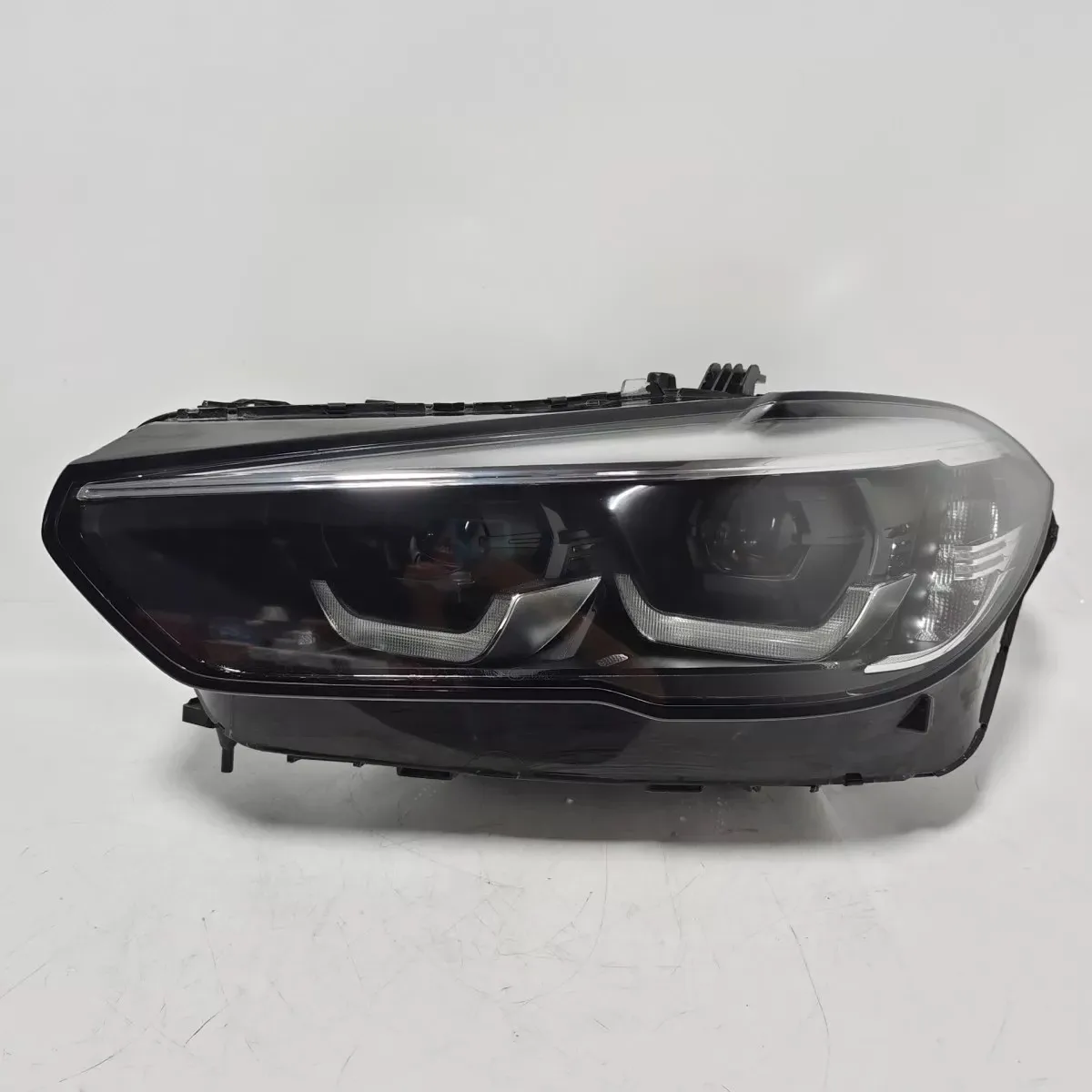
Figure 4. Low-spec headlight used in this example. Compare the inner section near the grille, rather than only the housing, DRL shape, or connector position.
A low-spec headlight with a non-functional inner lens cannot directly replace a mid-spec headlight with a functional auxiliary cornering-light module.
Why similar-looking headlights cannot be mixed
The issue is not limited to whether the lamp housing can be physically fitted. The original vehicle equipment, internal driver logic, and the circuits monitored by the body control system must match.
Original vehicle configuration and headlight hardware must match
In this case, the original vehicle configuration includes headlights with auxiliary cornering-light hardware. The body control system expects the related lighting circuit to be present and to operate correctly.
Installing a low-spec unit without that hardware can create a missing-circuit or load-mismatch condition. Possible results can include warning messages, lighting faults, or abnormal behavior in low beam, high beam, or adaptive-light functions. The exact fault must be confirmed through vehicle diagnostics.
The internal drivers and circuits are different
A mid-spec headlight must support the required outputs and control logic for low beam, high beam, daytime running lights, and the auxiliary cornering light. The low-spec version does not include the corresponding cornering-light hardware and circuit.
For this reason, moving a driver board to a different housing is not a reliable solution. Even if an external connector appears similar, the low-spec housing lacks the matching light source and internal circuit, which can still cause communication or function-monitoring faults.
Coding is not a universal solution
Changing vehicle coding should not be treated as a universal compatibility fix. The vehicle control system and the original headlight hardware are designed as a matched set. Trying to bypass a hardware mismatch through coding may not clear the fault consistently and may affect lamp self-checks or adaptive-light functions.
The correct approach is to confirm the original version first, then install a headlight with the same functional equipment level.
Four checks before ordering or installation
- Provide the VIN or original equipment list. Do not match a headlight only by the description “BMW G05 headlight.”
- Send clear front and rear photos of the original headlight. The front photo helps verify the inner structure; the rear label and connector help confirm the version.
- Check for the auxiliary cornering-light function. Look for a real LED source and functional module, not only a clear trim piece.
- Match the original equipment level. If the vehicle originally has an auxiliary cornering light, use a replacement headlight with equivalent hardware. Do not treat a low-spec unit as a direct replacement.
Confirm the version before quoting or installing
Low-spec and mid-spec BMW G05 headlights can look nearly identical, but their internal hardware, output channels, and vehicle control logic are different. The non-functional inner structure in a low-spec headlight cannot replace the functional LED auxiliary cornering-light module in a mid-spec unit.
Need help confirming a BMW G05 headlight version? Send the VIN, clear front and rear photos of the original headlight, the vehicle equipment details, and the required quantity. We will verify the headlight version and functions before recommending the correct product and quotation.
Before ordering, review our used OEM BMW headlights stock and follow the VIN & OE verification process to confirm the correct version.