
Toyota front grille emblems are not universally interchangeable. Two badges may look similar from the front but differ in dimensions, mounting tabs, rear structure, finish and compatibility with vehicle safety systems. The safest identification method is to verify the complete OE number, VIN and the physical structure of the original emblem.
Important: A color, prefix or front appearance alone cannot confirm radar/ACC compatibility or genuine Toyota origin.
Are All Toyota Emblems the Same Size?
No. Toyota emblems vary by vehicle model, model year, grille design, mounting method and equipment package. The outer shape may be similar while the width, height, curvature, clip positions or rear mounting points are different. Measure the original emblem and compare its full rear structure before ordering.
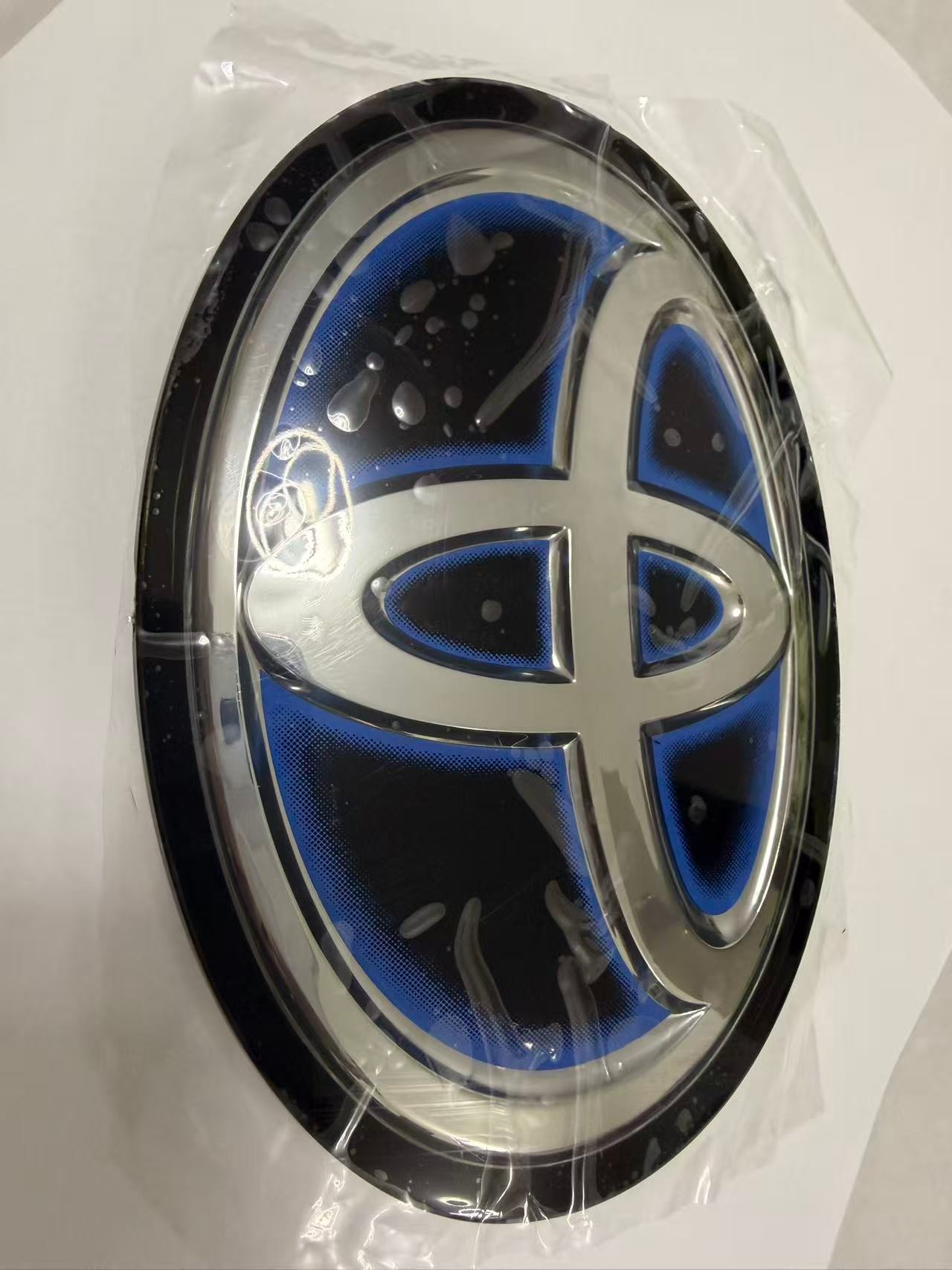
Step 1: Identify the Exact Part You Need
First determine whether the item is:
- A front grille emblem;
- A rear tailgate emblem;
- A radar/ACC cover positioned in front of a sensor;
- A decorative badge attached to a separate bracket;
- Or a complete emblem and mounting assembly.
Parts from these groups may share a similar Toyota logo but are not automatically interchangeable.
Step 2: Find the Full OE Number
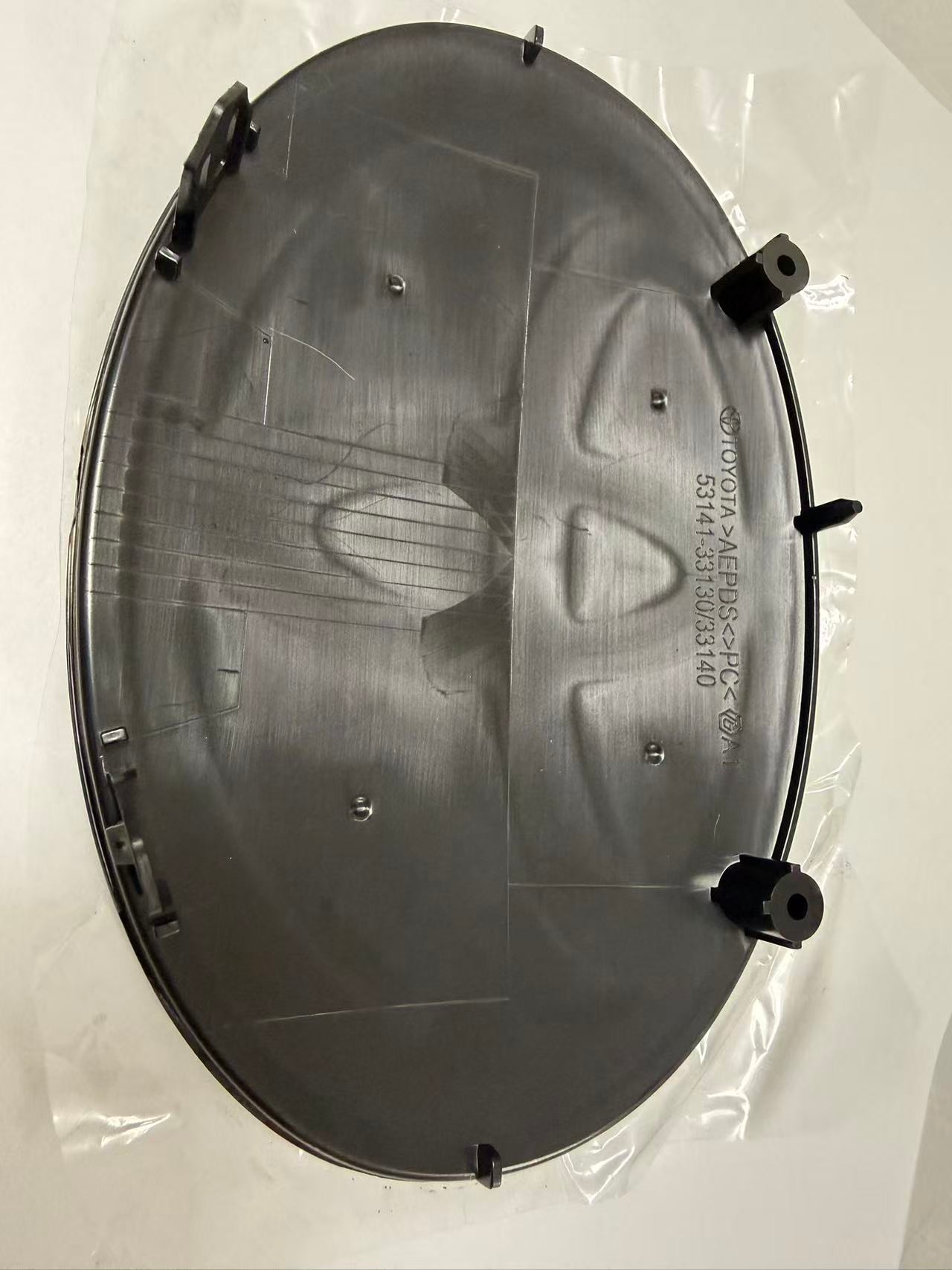
Remove or inspect the original emblem and photograph the rear surface. Look for a complete Toyota part number, usually presented in a format such as XXXXX-XXXXX. Also record any molded references, material codes, supplier markings and bracket numbers.
A molded number can be an important identification clue, but it may refer to a component, mold or earlier number rather than the current sales part number. Do not rely on one partial marking alone.
Step 3: Check the Number in a Toyota Parts Catalog
Use a Toyota parts catalog or an authorized parts source to check:
- The current part number;
- Any previous or superseded number;
- The vehicle model and production market;
- The installation position;
- Relevant equipment or option notes.
A catalog record can confirm that a number exists and show how it is classified. It does not, by itself, prove that the physical item in hand is genuine or that it fits every vehicle shown on third-party compatibility lists.
Step 4: Match the VIN and Physical Structure
Confirm the candidate part against the vehicle VIN and the original emblem. Compare:
- Overall dimensions and curvature;
- Mounting tabs and clip positions;
- Rear bracket or carrier structure;
- Connector or sensor-related features, if present;
- The complete OE number and any supersession record.
Model year alone is not enough because equipment and regional production specifications can differ within the same year.
How to Check Radar and ACC Compatibility
Some Toyota emblems are installed in front of radar or pre-collision system components. Their materials and structure must be suitable for that application. A visually similar decorative badge may interfere with sensor performance, trigger a warning or affect system operation.
Do not use the 53141 or 90975 prefix as a universal radar test. Toyota part-number families contain many components and applications. Confirm the complete OE number, vehicle equipment, VIN, installation structure and reliable catalog notes.
Radar/ACC Verification Checklist
- Does the vehicle actually have a front radar or pre-collision sensor?
- Does the complete OE number match the catalog and original part?
- Do the dimensions, tabs, brackets and installation angle match?
- Is the item an emblem, a radar cover or a complete mounting assembly?
- Was the vehicle involved in a front-end collision?
- Does the system show warning lights or diagnostic fault codes?
After a collision or bracket replacement, have the sensor mounting and calibration requirements checked by a qualified technician.
Does a Blue Toyota Emblem Mean Hybrid or Radar-Compatible?
A blue accent is a visual or model-configuration clue, not a universal compatibility certificate. Toyota has used different blue, silver and black emblem designs across models, markets and production periods. A blue emblem does not automatically prove that the vehicle is hybrid or that the emblem is suitable for radar/ACC use. Likewise, a silver emblem can still be installed in front of a sensor on some configurations.
Use the complete OE number, VIN and rear structure—not color alone—to confirm the correct part.
Genuine vs Aftermarket: Use an Evidence Chain
| Evidence | What It Can Show | What It Cannot Prove Alone |
|---|---|---|
| Rear OE marking | Provides a number to investigate | That the item is genuine or correct for every vehicle |
| Catalog record | Shows how a number is classified | The origin of the physical item in hand |
| VIN match | Narrows the correct vehicle configuration | Condition or authenticity without an item inspection |
| Traceable sourcing records | Support provenance and supplier accountability | Correct fitment without VIN and physical comparison |
| Dimensions, tabs and materials | Help assess installation and functional risk | Radar performance from appearance alone |
OE Case Study: Toyota 53141-0R150
Toyota’s public parts page identifies 53141-0R150 as a radiator grille garnish and lists 53141-33130 as a previous version. Other catalogs or sellers may display additional references, years or vehicle lists. These third-party statements should not be treated as an automatic fitment guarantee.
For the current physical sample used in this guide, the rear surface is molded with 53141-33130/33140 (see the rear-view photo in Step 2). That molded reference is identification evidence for this specific item — our Toyota RAV4 53141-0R150 emblem listing, where the replacement-number version may be marked 53141-33130 or 53141-33140. We confirm the actual item, rear marking, mounting structure and VIN before shipment. This evidence for the current sample is not an unconditional statement that the same marking fits every vehicle or model-year configuration, so verify your own VIN and original part before ordering.
View the Toyota RAV4 53141-0R150 radar emblem and request a VIN check.
Common Identification Mistakes
- Buying only by model year;
- Assuming blue, silver or black color proves compatibility;
- Treating a number without hyphens as a different OE number;
- Using a rear emblem in place of a front radar cover;
- Assuming clear molded text alone proves genuine origin;
- Replacing the emblem after a collision without checking the bracket and radar system.
What to Send for Verification
For an accurate check, send:
- Your 17-character VIN;
- A clear photo of the complete number on the back of the original emblem;
- Front, rear, side and mounting-tab photos;
- Vehicle model, model year and sales market;
- Whether the vehicle has ACC/PCS warnings or previous front-end damage.
Send your VIN and original emblem photos on WhatsApp.
Frequently Asked Questions
Does every 53141 Toyota emblem support radar?
No. A prefix alone is not enough. Check the complete OE number, VIN, vehicle equipment and physical structure.
Is every 90975 emblem non-radar?
No universal conclusion should be made from the prefix alone. Verify the complete number and its application.
Does a blue Toyota emblem always mean hybrid?
No. Color is only a visual clue and varies by model, market and production period.
Does replacing an emblem require radar calibration?
Requirements depend on the vehicle and the work performed. If the sensor, bracket or mounting angle was disturbed—or the vehicle had front-end damage—have the system checked by a qualified technician.
What if the rear number cannot be read?
Send the VIN plus clear front, rear, side, tab and mounting-area photos. Do not order only from the front appearance.